

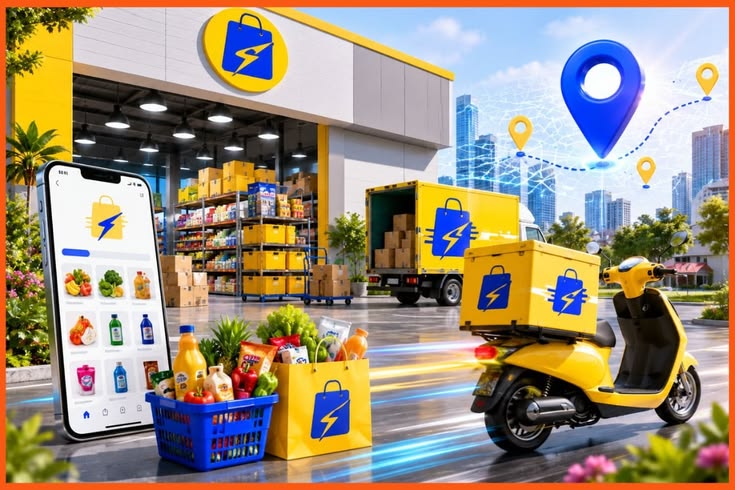
Flipkart is preparing to enter India’s competitive online food-delivery market with a new service currently being tested under the internal name “Eat-in by Minutes.” The Walmart-owned e-commerce company has expanded the pilot from a few hundred staff members to around 8,000 employees in Bengaluru and is expected to make the offering available to the public before the end of October 2026.
The move positions Flipkart as a direct challenger to the established duo of Zomato and Swiggy, which together dominate the majority of the country’s online food-ordering volume. The company is leveraging its existing app, logistics network and restaurant partnerships to create a differentiated entry point into a market that has proved difficult for previous large technology players to crack.
Internal Testing and Operational Setup
The food-delivery service appears as a dedicated tab within the main Flipkart shopping app, sitting alongside the company’s Minutes quick-commerce offering and travel bookings. Employees participating in the trial can place orders from restaurants listed through the Open Network for Digital Commerce (ONDC) as well as from establishments that Flipkart has signed up directly.
To fulfil orders, Flipkart has deployed a dedicated fleet of riders through its logistics arm, Ekart. These delivery partners operate separately from those handling quick-commerce shipments. Riders wearing “Eat-in by Minutes” branded apparel have already been observed on the streets of Bengaluru, signalling that the operational side of the service is advancing beyond pure software testing.
The gradual expansion of the employee pilot allows Flipkart to gather real-world feedback on ordering flow, restaurant partnerships, delivery times and customer experience before a broader consumer rollout.
Planned Public Launch and Expansion Plans
According to people familiar with the matter and statements from restaurant industry representatives, Flipkart has indicated to restaurant partners that a public launch is targeted by the end of October 2026. The company is also expected to expand the service beyond Bengaluru to five or six cities by the end of the year.
This phased approach mirrors the strategy Flipkart followed with its quick-commerce business, Flipkart Minutes. The company typically begins with a limited pilot, refines the offering based on user response, and then scales once the model demonstrates traction.
Competitive Landscape and Market Opportunity
India’s online food-delivery sector remains highly concentrated. Zomato and Swiggy together serve an estimated 85 million to 95 million paying customers annually and account for the overwhelming majority of online order volume. Online delivery still represents only a portion of the broader food-services industry, leaving room for growth as internet penetration and consumer habits continue to evolve.
Previous attempts by large global technology companies to enter the market met limited success. Flipkart’s entry benefits from several structural advantages: a large existing user base on its e-commerce platform, an established logistics network through Ekart, and the ability to integrate food ordering into a familiar shopping interface.
The company is also exploring commission rates that could be more attractive to restaurants than those charged by the dominant platforms, potentially helping it secure supply-side partnerships more quickly.
Integration with Existing Flipkart Ecosystem
By placing food delivery inside the main Flipkart app rather than launching it solely as a standalone product, the company can cross-promote the service to its millions of existing shoppers. Users already familiar with Minutes for groceries and essentials may find it convenient to order meals from the same interface.
The dual use of ONDC listings and direct restaurant agreements gives Flipkart flexibility in building its catalogue. ONDC provides access to a wider network of sellers, while direct partnerships allow the company to prioritise quality, reliability and exclusive arrangements where useful.
Challenges Ahead
Entering food delivery is not without risks. The market is capital-intensive, dependent on dense restaurant networks, reliable last-mile logistics and sustained customer acquisition. Incumbents have spent years optimising delivery times, customer support and restaurant relationships. New entrants must also manage unit economics carefully, balancing growth with the need to avoid prolonged losses.
Flipkart’s decision to begin with a large internal pilot reduces some of the early execution risk by allowing the company to stress-test systems and processes before opening the service to the general public. Success will ultimately depend on whether the offering can deliver consistent speed, selection and value that persuade users to switch or add Flipkart as a regular ordering option.
Broader Implications for Indian Commerce
Flipkart’s expansion into food delivery continues a pattern of diversification beyond traditional e-commerce. The company already operates quick commerce, fashion through Myntra, travel through Cleartrip and other services. Adding meals further embeds Flipkart in the daily consumption habits of urban consumers.
For restaurants, the arrival of another large platform may increase competition for visibility and potentially improve negotiating leverage on commissions. For consumers, greater choice could translate into more promotions, wider selection or improved service levels over time.
As testing continues and a public launch approaches, attention will focus on how quickly Flipkart can scale beyond Bengaluru and whether its combination of scale, logistics and app integration proves sufficient to gain meaningful share in a market long defined by two dominant players. The coming weeks will provide the first clear indications of whether “Eat-in by Minutes” can move from internal experiment to a lasting presence in India’s food-delivery landscape.
Read more – wishdua.com