

Starting a business no longer requires large amounts of capital or years of experience. In 2026, many successful ventures begin with little more than a laptop, a smartphone, existing skills, and a clear offer. Service-based and digital models dominate the low-investment landscape because they keep overhead minimal, allow rapid testing of demand, and often generate the first revenue within weeks rather than months. For first-time entrepreneurs, the most reliable path is choosing an idea that matches current abilities while solving a real need for customers.
Why Low-Investment Models Work Well for Beginners
Low-startup businesses reduce financial risk and make it possible to launch while still employed. Many can begin for under $500, with some requiring almost nothing beyond time and basic tools. These models typically feature high gross margins because the primary cost is the founder’s labor rather than inventory or storefronts. Recurring demand—through retainers, weekly services, or repeat clients—helps create steadier income. Success depends less on perfect ideas and more on consistent delivery, clear communication, and finding the first handful of paying customers.
Service-Based Ideas That Leverage Existing Skills
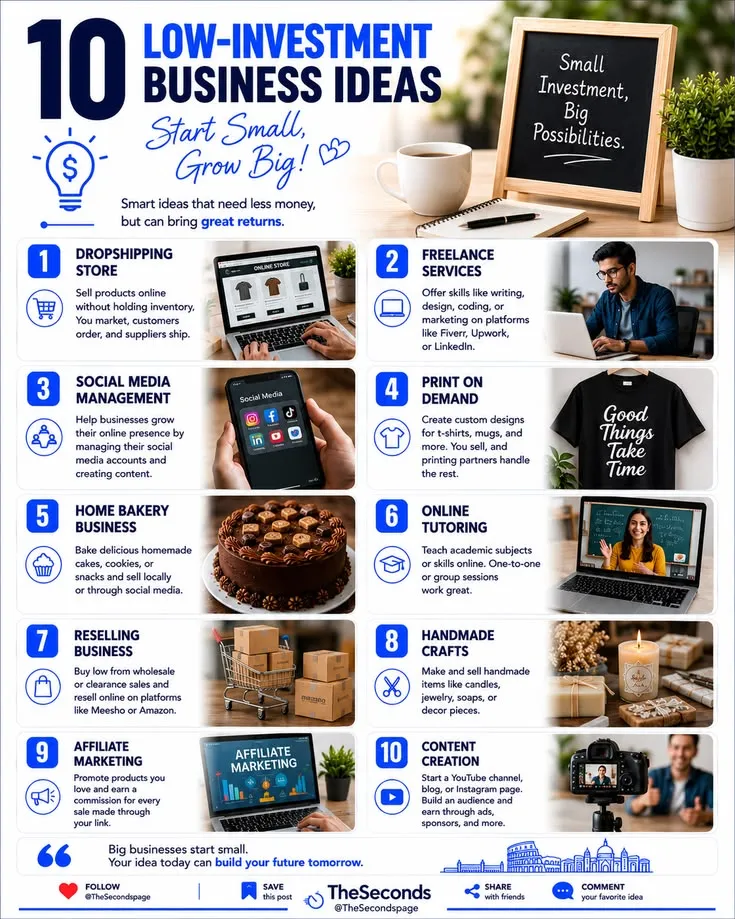
Virtual assistance remains one of the most accessible entry points. Entrepreneurs handle email management, calendar scheduling, research, travel booking, or light administrative tasks for busy professionals and small business owners. Startup costs stay near zero to a few hundred dollars for basic software. Many begin earning within one to two weeks by listing services on freelance platforms or reaching out to local founders. Hourly rates or monthly retainers make income predictable once a few clients are secured.
Freelance writing and copywriting offer similar advantages. Businesses continually need blog posts, website content, email sequences, and social media copy. Specializing in a niche such as health, finance, technology, or local services allows higher rates. All that is required is a computer and internet access. First payments commonly arrive within one to three weeks after building a simple portfolio and pitching potential clients.
Online tutoring and coaching convert knowledge into income with almost no upfront cost. Subject experts, teachers, language speakers, or professionals in any field can offer sessions via video platforms. Demand remains steady for academic support, test preparation, skill development, and career guidance. Flexible scheduling makes this ideal for part-time starts, with many seeing clients within days to a couple of weeks.
Social media management suits those comfortable with digital platforms. Small businesses often need consistent posting, content planning, and engagement without hiring full-time staff. Basic scheduling tools keep costs low. Monthly retainers create recurring revenue, and first clients can appear within a few weeks of outreach or platform listings.
Local service businesses such as house cleaning, pet sitting, or dog walking require modest investment in basic supplies or insurance and generate demand quickly through neighborhood networks and online listings. These options appeal to people who prefer in-person work and can produce steady local income with limited marketing.
Digital and Product-Based Options with Minimal Inventory
Dropshipping allows online sales without holding stock. The entrepreneur markets products, and a supplier ships directly to the customer. Setup involves an online store and initial marketing spend, often starting under a few hundred dollars. Success hinges on product research and customer acquisition rather than logistics.
Print-on-demand follows a related model. Designs are uploaded to platforms that handle printing and shipping of items such as apparel or accessories. Basic design tools are sufficient, and startup costs can stay near zero. This approach works well for creative individuals who can identify niche audiences.
Digital products—including online courses, templates, planners, or downloadable resources—offer high margins once created. The main investment is time spent developing valuable content. Distribution through marketplaces or a simple website keeps ongoing costs low. While audience building takes longer, the model scales efficiently.
Affiliate marketing involves promoting other companies’ products and earning commissions on resulting sales. Content creation through blogs, social channels, or newsletters drives traffic. No inventory is needed, and the barrier to entry remains low for those willing to produce consistent, useful material.
Choosing and Launching the Right Idea
The strongest low-investment ideas share common traits: they use skills the founder already possesses or can quickly develop, they address ongoing customer needs, and they allow testing with limited money. Beginners should evaluate personal strengths, available time, and preferred work style—remote versus local, creative versus organizational, flexible versus structured.
Practical first steps include defining a clear service or product offer, setting simple pricing, creating a basic online presence or platform profile, and actively seeking the initial clients through outreach, local networks, or freelance marketplaces. Tracking time, expenses, and customer feedback early helps refine the offer. Many founders start part-time to validate demand before increasing commitment.
Legal and operational basics matter even at low cost. Registering as a sole proprietorship or similar simple structure, understanding local tax requirements, and obtaining any necessary insurance or permits protect the business from the beginning. Free or low-cost tools handle invoicing, scheduling, and basic bookkeeping.
Building Momentum and Avoiding Common Pitfalls
Consistency often matters more than perfection. Delivering reliable results builds referrals and reviews that reduce the need for paid advertising. Focusing on a specific niche improves conversion rates and allows premium pricing over time. Avoid spreading effort across too many ideas; depth in one area produces faster results than shallow attempts at several.
Cash flow management is essential. Reinvest early earnings into tools or marketing that directly support growth rather than unnecessary expenses. Track which activities generate clients so energy concentrates on what works. Patience is required—most low-investment businesses show meaningful progress within the first few months of steady effort rather than overnight success.
In 2026 the combination of digital platforms, remote work culture, and accessible tools has lowered barriers significantly. First-time entrepreneurs who select an idea aligned with their abilities, start with a clear offer, and focus on solving real problems for customers can build sustainable income without large capital outlays. The opportunity lies not in finding a perfect secret formula but in taking practical, low-risk action with the resources already at hand.
Read more- marathimeanings.com