

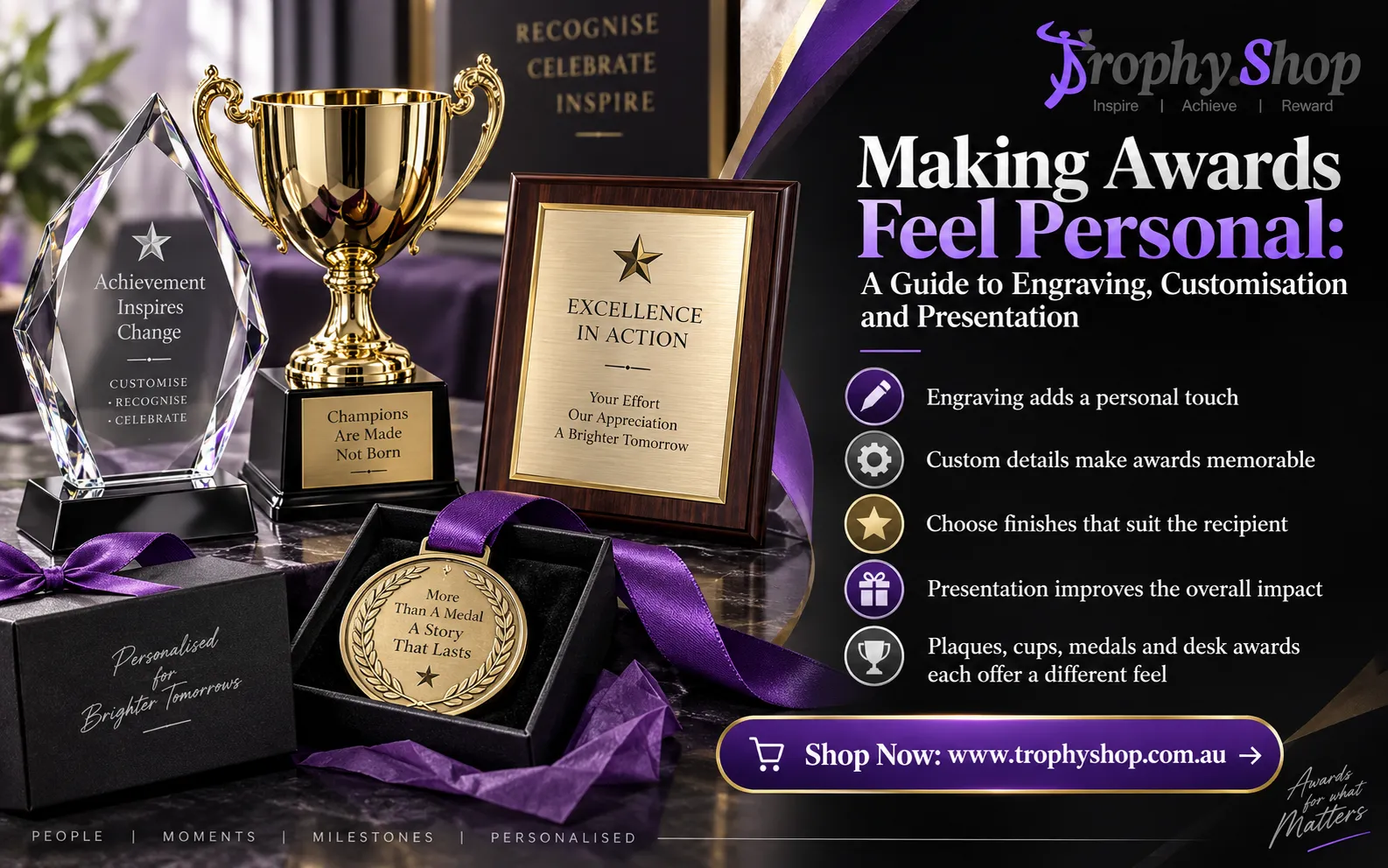
A good award does more than mark a result. It tells someone that their effort was noticed, their contribution mattered, or their achievement was worth remembering. Personalisation can make that message considerably stronger, particularly when the award is kept for years after the ceremony.
Engraving, carefully selected designs, and thoughtful presentation all contribute to that experience. If you plan to order custom awards, it helps to think beyond the object itself and consider the story the finished award should communicate.
Personalisation Starts With the Message
The first question is not which trophy or plaque to buy. It is what you want the recipient to remember when they look at it later.
A sporting award might recognise a specific placing, while a workplace award could acknowledge leadership, teamwork, creativity, or a significant contribution. Community organisations may want to recognise volunteers whose work is not always measured by a competition result.
That purpose should guide the wording and design.
Keep Recognition Specific
Generic wording can make an award feel interchangeable. A short but specific message often creates a stronger connection.
Useful details can include:
-
Recipient’s name
-
Award category
-
Achievement or contribution
-
Event or organisation name
-
Year of presentation
-
A brief message where space allows
Not every award needs all of these elements. The available engraving area should determine how much information is included.
Understanding Engraving Options
Engraving gives an award a permanent element of personalisation. It can be used for names, dates, titles, achievements, or short messages, depending on the product.
The visual result can vary according to the material and design of the award. Before approving artwork, consider how the text will appear against the surface and whether the selected typeface remains easy to read.
engraved awards can be particularly effective when the wording is restrained. A clean name and achievement title may look more professional than trying to fit a long paragraph onto a small plate.
Choose Text With the Physical Space in Mind
One of the common mistakes in custom recognition is writing the message first and trying to make it fit afterward. Reverse that process.
Look at the available engraving area and decide which information is genuinely important. If the award is small, the recipient’s name, award title, and year may be enough. A larger plaque may accommodate a longer recognition message.
Readable text is more valuable than excessive detail.
Customisation Is More Than Adding a Name
Personalisation can involve shape, material, colour, layout, logo placement, and presentation. The goal is to create something that feels connected to the event or organisation.
For a company ceremony, branding elements can help create a consistent appearance. For a school event, colours or symbols associated with the school may make the award more meaningful. Sporting clubs may choose designs that reflect the character of their discipline.
The best approach is selective rather than excessive. Too many decorative elements can compete with the central message.
Match the Award to the Occasion
The style of recognition should suit the achievement. A formal professional milestone may call for a refined design, while a youth sporting event might benefit from something more energetic and colourful.
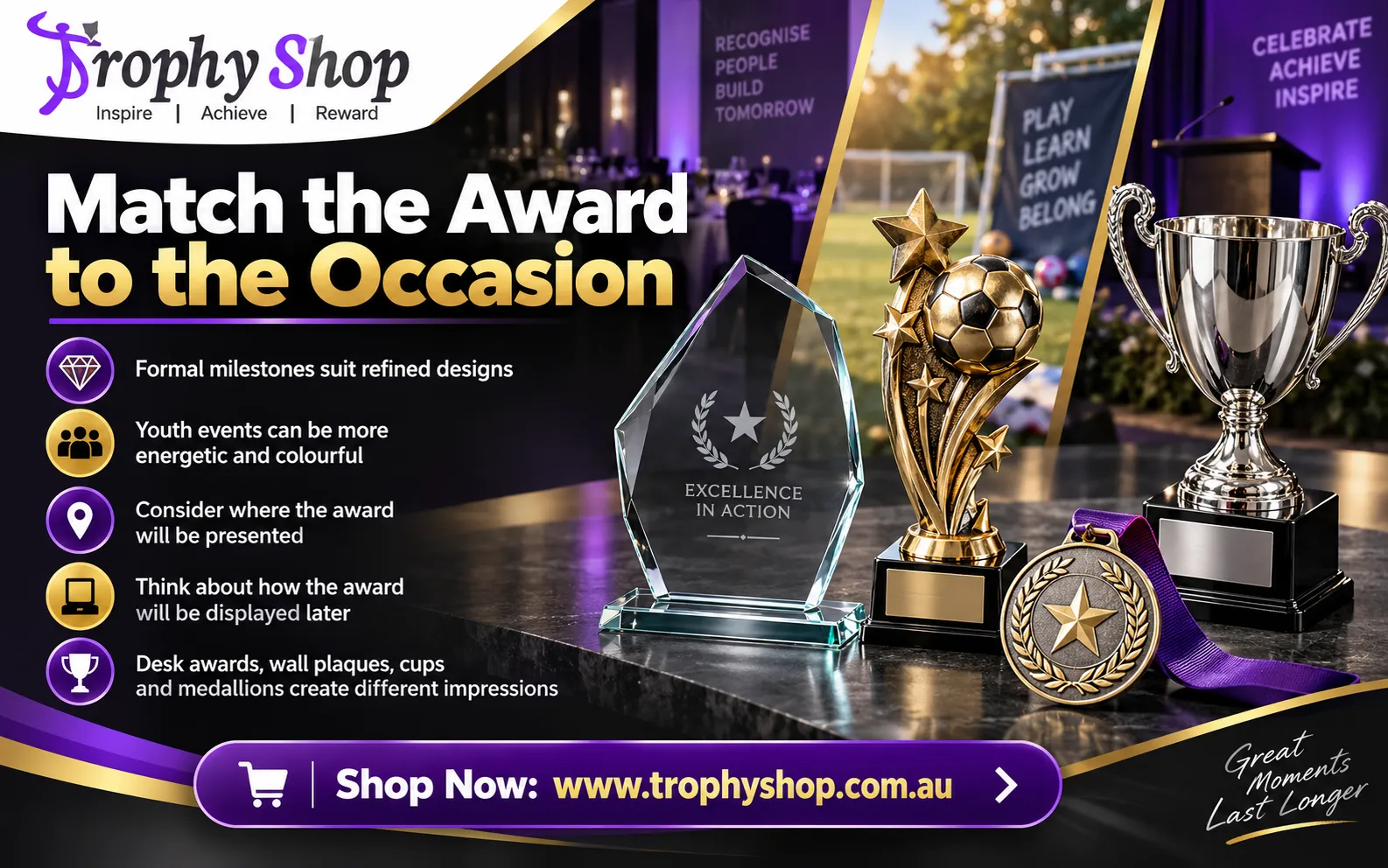
Consider the setting in which the award will be presented and eventually displayed. A desk award, wall plaque, cup, and medallion each create a different visual impression.
Think About the Recipient
Personalisation becomes more effective when the recipient is considered as an individual rather than simply another name on a list.
For example, an employee receiving a service recognition award may value a clean, understated design. A young athlete might appreciate a more colourful presentation. A volunteer who has contributed behind the scenes may respond particularly well to wording that explains why their contribution was recognised.
The award should make sense to the person receiving it.
Preparing Information for a Custom Order
Once the design has been selected, organise the information before sending it to the supplier. This is especially important when multiple awards contain different names or categories.
Create a simple list or spreadsheet containing each recipient and the exact wording required. Review capitalisation and spelling before submitting it.
If you are ordering multiple versions, label them clearly. For example, separating first-place awards from participation awards can reduce confusion during both production and distribution.
Presentation Can Change the Experience
Even a beautifully customised award can lose some of its impact if it is handed over without thought. Presentation creates the moment in which recognition becomes memorable.
Consider where the award will be presented, who will announce it, and how the recipient’s achievement will be described. A short introduction can give context to the engraved item.
Packaging also has a practical role. It protects the award before presentation and can make the handover feel more polished.
Making Personalised Awards Consistent
For events involving several recipients, consistency matters. personalised awards can have individual names and achievements while still sharing a common design language.
Use the same general typography, layout, material, or colour scheme where appropriate. This creates a connected collection rather than a group of unrelated objects.
At the same time, avoid making every award look identical if the achievements are substantially different. Small variations can help distinguish categories without losing overall consistency.
A Practical Approval Process
Before production, review a final version of the information. A useful process is:
-
Confirm the award category.
-
Check each recipient’s name.
-
Verify dates and event details.
-
Review the engraving layout.
-
Check logos and visual elements.
-
Approve the final information only after another careful read.
A second pair of eyes can be useful for large orders because people often overlook familiar names or repeated information.
Why Choose Us
Choosing a recognition supplier involves more than comparing product photographs. Customers need a clear path from selecting an award to preparing the details that make it personal.
A quality-focused service can help customers approach customisation thoughtfully, while clear communication makes it easier to keep names, categories, and presentation requirements organised.
For buyers arranging recognition for a group, flexibility in design and attention to individual details can also make the process more practical. The objective is to create awards that feel considered rather than mass-produced, even when several recipients are involved.
About Us
Trophy Shop offers recognition products designed for occasions where achievements, milestones, and contributions deserve to be acknowledged. Its awards collection provides a starting point for customers who want to explore options and add a personal element to their presentation.
Personalisation works best when the product, wording, and presentation support the same message. By giving those elements equal attention, customers can create recognition pieces that feel appropriate to the occasion and meaningful to the recipient.
Conclusion
An award becomes more memorable when it carries information that belongs specifically to the person and the occasion. A name, achievement, date, or carefully written message can turn a standard recognition product into a personal keepsake.
Before placing an order, think about the recipient, edit the wording carefully, consider the available engraving space, and plan how the award will be presented. Those small decisions can make the final recognition feel much more deliberate and sincere.